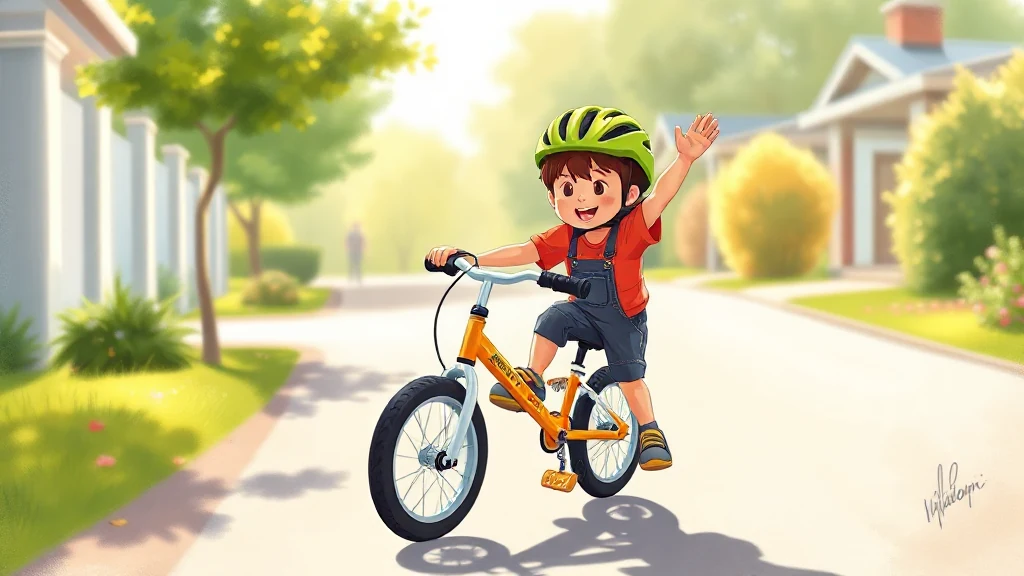
There is a specific kind of tension that happens in the driveway when it’s time to take the training wheels off.
You see it in your child’s eyes-that mixture of “I want to go fast” and “What if I fall?” It’s one of those quintessential milestones where physical skill meets emotional bravery. For many parents, this transition isn’t just about mastering balance; it’s about helping a child navigate the very real fear of the unknown.
When we work on creating personalized books, we often talk about how stories serve as “mental rehearsals.” Just as your child needs to feel comfortable with their bike by picking out colors or wearing a helmet, they can use a story to build the mental muscles needed for courage.
The Psychology of the “First Ride”
Learning to ride a bike is what educators call a “scaffolded” success. It’s a task designed to be just challenging enough to require effort, but achievable enough to avoid total frustration. However, the biggest hurdle often isn’t the physics of pedaling-it’s the psychological barrier of falling.
To overcome this, we have to shift the focus from “perfect execution” to “growth mindset.” When a child falls and gets back up, they aren’t just learning to balance; they are practicing perseverance. We want them to see that a wobble isn’t a failure; it’s just part of the process of becoming a rider.
Building Confidence Through Narrative
One of the most effective ways to prepare a child for a physical challenge is through “narrative immersion.” Before they even touch the pedals, they can inhabit the role of a hero in a story who faces their own fears.
When a child sees themselves as the protagonist of an adventure-where they face a “scary” obstacle and come out successful-it changes their internal monologue. Instead of thinking I might fall, they start to think I am a brave explorer. You can begin this journey of mental preparation by creating a personalized book where your child is the hero, helping them visualize success through https://makemybook.app/en/console before they ever hit the pavement.
Creating a “Safe” Mental Space
I’ve noticed that children who are particularly anxious about falling often do best when they have a sense of ownership. This is why I’m a big believer in letting kids choose their gear-the stickers on the helmet, the color of the bell, or even the name of their bike.
In the world of storytelling, this “ownership” translates to the narrative. A personalized story isn’t just a book where we swap out names; it’s a tailored experience where the journey is built around their specific interests and fears. If your child is afraid of “the big hill,” the story can feature them conquering a mountain. This builds an internal reservoir of confidence that they can draw from when the actual ground feels shaky beneath their tires.
Tips for the Transition:
- Validate the fear: Acknowledge that falling is scary, but remind them that you are right there with them.
- Focus on balance first: Spend time on “balance bikes” or just scooting without pedals to build foundational confidence.
- Celebrate the effort: Praise the attempt and the persistence, not just the final speed.
By weaving together a personal narrative of bravery, you give your child a toolkit for courage that stays with them long after the bike is parked in the garage.
We believe that every child’s journey-whether it’s learning to ride a bike or mastering a new skill at school-is fueled by the confidence they build today. A great story is often the best way to start that journey of self-belief.