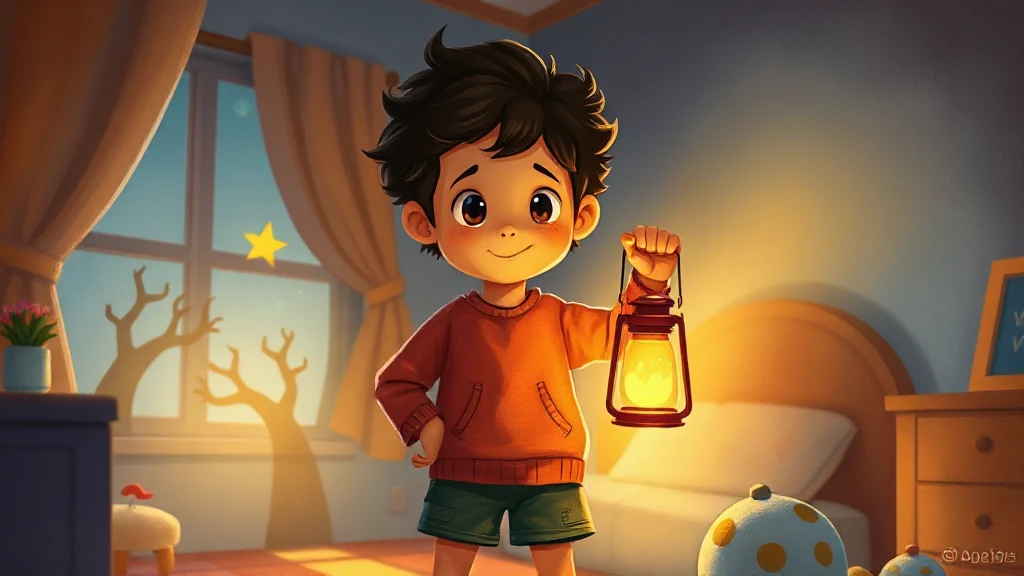
It’s 7:30 PM. The house is quiet, the pajamas are on, and you’re trying to make the bedtime transition as smooth as possible. But then comes that specific look-a wide-eyed glance toward the corner of the room or a sudden, shaky “What if there’s a monster under my bed?”
It’s a moment every parent knows well. That heavy knot of worry in your chest when you see your child genuinely afraid of the shadows. You want to comfort them, but sometimes it feels like common logic-“There are no monsters, honey”-just doesn’t land. They aren’t just afraid of a monster; they are navigating a big, overwhelming feeling of the “unknown,” and they need something more tangible than a simple reassurance.
Why Does the Fear of the Dark Feel So Big?
For a young child, imagination is a superpower. It allows them to build worlds, create friends, and imagine adventures. However, that same imagination can sometimes turn toward the shadows. When a child is afraid of the dark, they are often struggling with their sense of agency. They feel small in a world that feels large and unpredictable after the lights go out.
In these moments, they aren’t looking for a lecture on physics or shadow-making; they are looking for a way to feel powerful again. This is where the magic of narrative comes in. When we can move from telling them they are safe to showing them how they can be brave, the dynamic shifts entirely.
Turning Fear into a Hero’s Journey
Instead of just dismissing the fear, we can use stories as a bridge. A story provides a “safe sandbox” where your child can encounter their fears in a controlled environment.
When a child sees themselves-or a character that looks and acts like them-face a challenge and overcome it, it builds something vital: self-efficacy. They learn that they have the inner strength to handle uncomfortable feelings. By making the child the hero of the story, we give them a roadmap for bravery. If you want to create a custom adventure where your child can practice being brave in their own way, you can start your book in the studio to craft a narrative that feels truly personal to them.
Quick Tip: Try “pre-loading” the bravery. Read stories about light and courage during the day so they have those positive images ready to call upon when it’s actually time for bed.
The Power of Personalization in Overcoming Fears
The real magic happens when a story is personalized. A standard book about a brave girl might be good, but a book where the hero has your child’s name, their favorite stuffed animal, and their specific fears (like “the creaky floorboard” or “the shadow under the chair”) is transformative.
When the narrative is tailored to them:
- It feels real: They see their own world reflected in the pages.
- It builds confidence: It reinforces that they are capable of handling specific, “real-life” hurdles.
- It creates a keepsake: The book becomes a physical tool they can reach for whenever they feel a flicker of doubt.
Because these stories are uniquely tailored, they offer much more than just entertainment; they provide a sense of ownership over their own emotions. You can learn more about how this works in our guide on the psychology of personalization.
Practical Ways to Use Stories as a Shield
If your child is struggling with bedtime anxiety, try these three “storytime” strategies:
- The Brave-Plan Strategy: Create a story where the main character (your child) gets special “tools” to deal with the dark-perhaps a magic flashlight or a “bravery charm.”
- The Neighborhood Tour: Instead of seeing the house as scary, turn it into a kingdom in your story. The hallway is a tunnel, and the bedroom is a fortress.
- The Shadow-Swap: Use a personalized book to give names to the “scary” things. If they are afraid of a shadow, make that shadow a friendly dragon who just needs a bedtime story too.
From Fear to Confidence
Ultimately, our goal isn’t just to get them to fall asleep; it’s to help them feel capable and safe in their own skin. By using personalized books, we aren’t just skipping over the “scary” stuff-we are giving them the tools to face it head-on.
When a child sees themselves as a hero who can navigate the dark, the shadows don’t seem so big anymore. They aren’t just reading a book; they are building the confidence to walk through their own world with their heads held high.
For more tips on how to use storytelling to build lasting inner strength, check out our guide on how personalized books build self-esteem and confidence.
Ready to turn their fears into a brave adventure? Create a unique story where your child is the hero of the night by visiting our creation console.